
A practical guide for people who lead
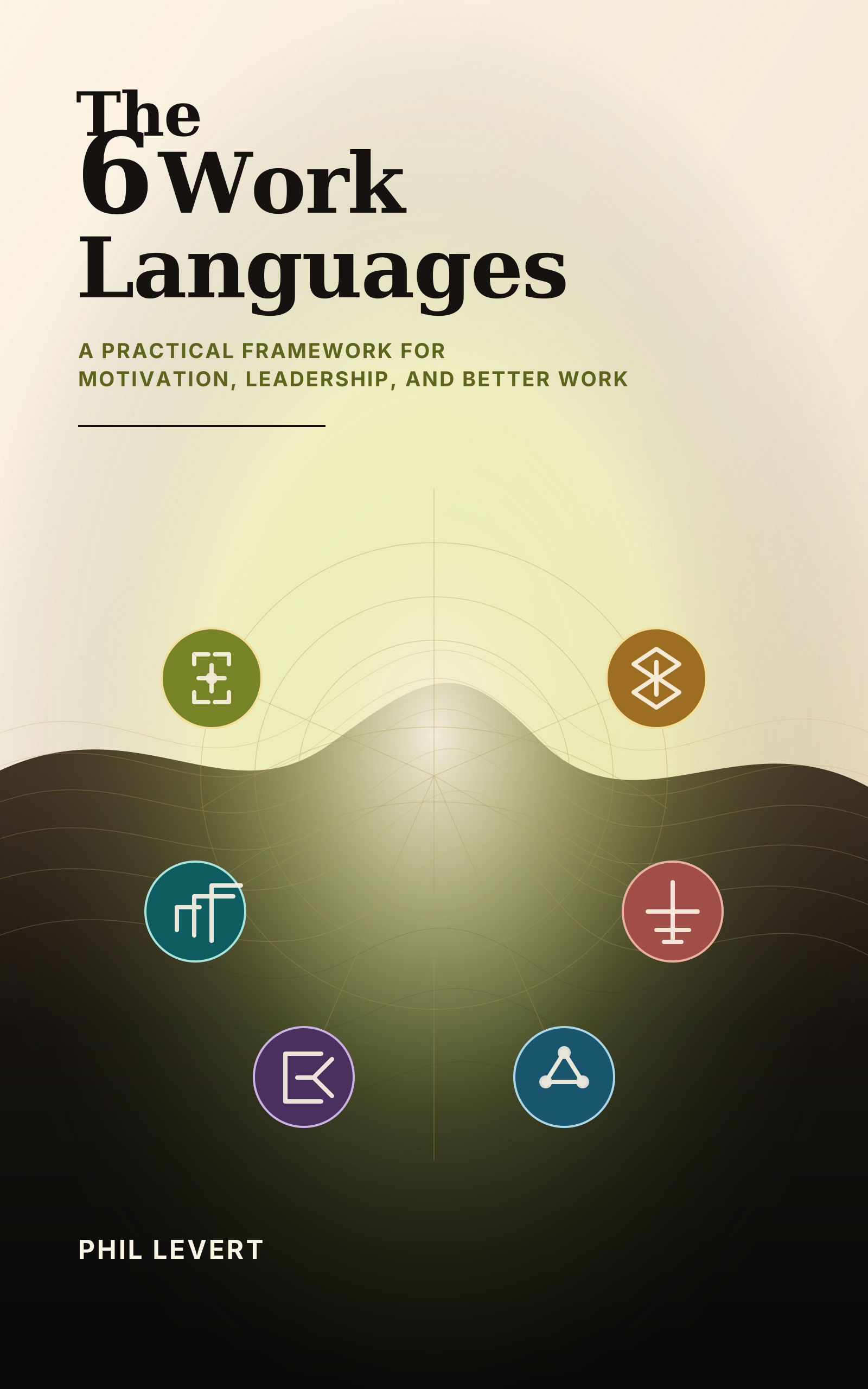
The 6 Work Languages
Recognition, Reward, Growth, Stability, Autonomy, and Connection shape how people experience the same workplace differently. This book shows how to notice those needs, talk about them without turning them into labels, and respond with more precision.
Launching August 28, 2026
Inside the book
From noticing a mismatch to changing the conversation.
- Learn the six patterns. Understand what each Work Language needs, how it tends to show up, and what happens when it is repeatedly missed.
- Recognize clashes. See why freedom can feel like trust to one person and abandonment to another—and why praise cannot substitute for fair reward.
- Lead more precisely. Use concrete questions, manager responses, and team practices without diagnosing or permanently typing anyone.
From Chapter Nine · When Work Languages Clash
Autonomy vs Stability
One of the most common clashes is between Autonomy and Stability.
The Autonomy-driven person wants room. They want the outcome, the constraints, and the trust to find the path. Too much process feels like control. Too many check-ins feel like distrust. Too much documentation can feel like drag.
The Stability-driven person wants clarity. They want documented decisions, defined ownership, predictable rhythms, and enough visibility to feel grounded. Too much freedom can feel like ambiguity. Too few check-ins can feel like risk. Too little documentation can feel like chaos.
Both may care deeply about doing good work. They simply define support differently.
On a project team, Marcus may say, “We do not need another meeting. Just let me build the prototype.” Elena may respond, “I am not comfortable moving until we know who owns the rollout plan and what success means.”
Marcus hears Elena as slowing everything down. Elena hears Marcus as creating unnecessary risk.
“Marcus needs enough freedom to solve the design problem without being over-managed. Elena needs enough structure to trust that the rollout will not become chaos. Let’s define the outcome, decision rights, and two check-in points. Marcus owns the design path. Elena owns the rollout dependencies. We do not need daily meetings, but we do need written decisions.”
The solution is not Autonomy or Stability. It is clear freedom.
Marcus and Elena are a composite illustration: a constructed workplace scenario based on recurring observations, with identifying details created to protect privacy and clarify the pattern.
Launching August 28
Get one reminder when the book launches.
No preorder is available yet. Leave your email and we’ll let you know when the book can be purchased.