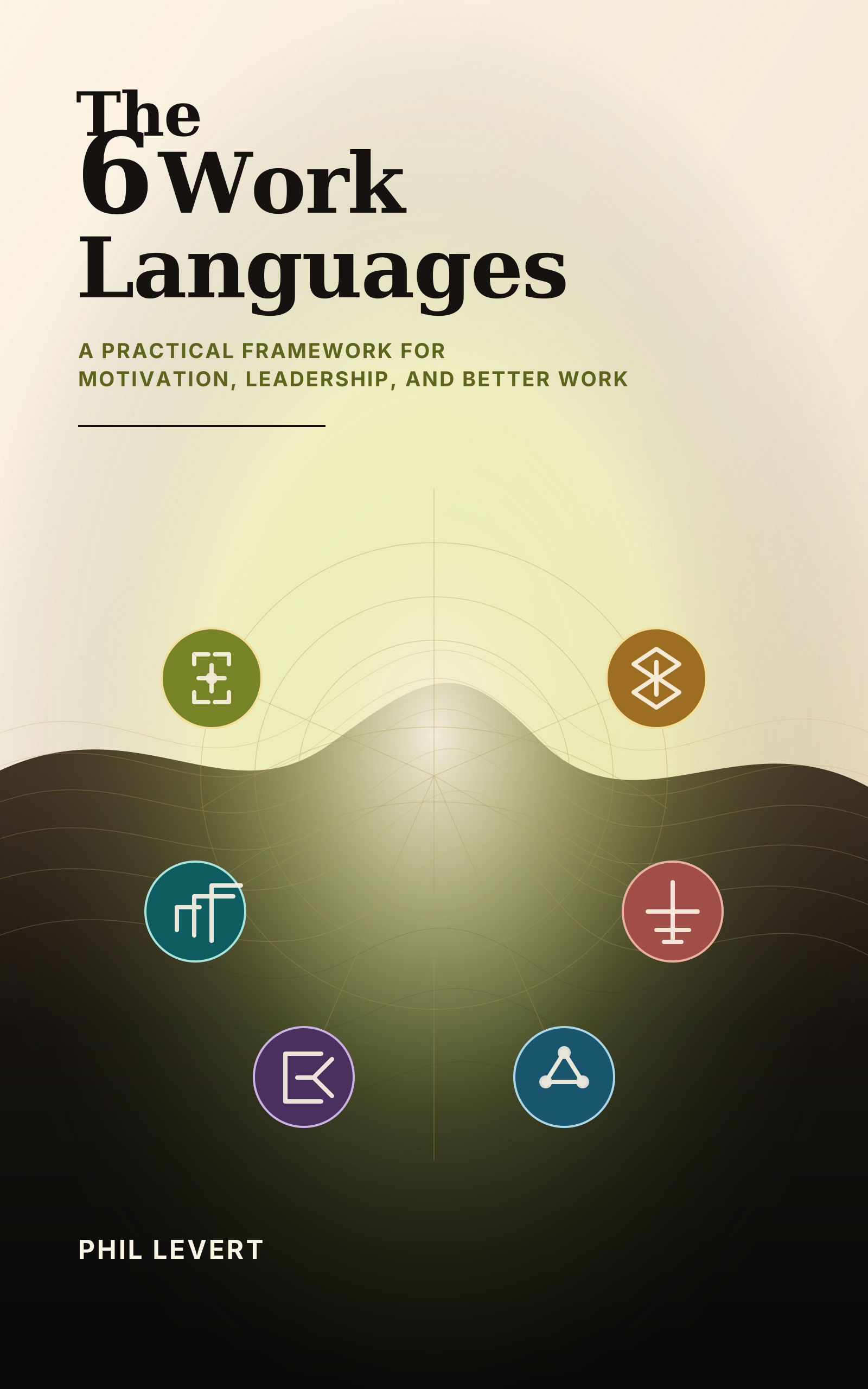
The same leadership move can motivate one person and alienate another. The 6 Work Languages gives you a practical way to notice the difference before good intentions become friction.
Six motivation patternsBuilt for real conversationsA reflection tool, not a diagnosis
A familiar mismatch
You praise the whole team. Only one person feels seen.
For someone who values Recognition, public credit may be energising. A colleague focused on Reward may hear the same praise and think, “But will the extra work be acknowledged fairly?” Someone driven by Growth may simply want to know what they can learn next.
The problem is not gratitude. It is assuming that one kind of support carries the same meaning for everyone.
The framework
Six ways people look for value at work.
Most people care about more than one. The framework helps you ask what is missing instead of labelling someone as difficult, unmotivated, or disengaged.
Recognition
When it’s present
I feel seen. Specific appreciation tells me my effort mattered.
When it’s missing
I feel invisible, even when I am doing work I care about.
Recognition
I need my contribution to be seen and appreciated.
When it’s present
I feel seen. Specific appreciation tells me my effort mattered.
When it’s missing
I feel invisible, even when I am doing work I care about.
Reward
I need effort and results to lead to a fair return.
When it’s present
I feel valued when the exchange is clear, fair, and kept.
When it’s missing
I feel taken for granted when extra effort brings no meaningful return.
Growth
I need to learn, stretch, and see a path forward.
When it’s present
I feel energised by challenge, feedback, and visible progress.
When it’s missing
I feel stuck when the work stops teaching me anything new.
Stability
I need clarity, consistency, and a secure footing.
When it’s present
I feel safe enough to focus because expectations are clear.
When it’s missing
I feel anxious when priorities, promises, or direction keep shifting.
Autonomy
I need trust, ownership, and room to choose how I work.
When it’s present
I feel trusted to use my judgement and make the work my own.
When it’s missing
I feel constrained when every decision is made or checked for me.
Connection
I need to belong and contribute to something shared.
When it’s present
I feel part of a team where people and purpose both matter.
When it’s missing
I feel isolated when work becomes only tasks, targets, and transactions.
Start with yourself
Which needs shape your experience of work?
The quiz offers a quick reflection on your likely primary and secondary Work Languages. Use the result as the beginning of a conversation, not a fixed label.
The manager conversation guide turns the framework into prompts for conversations about support, friction, and what meaningful work looks like to each person.
Get six conversation prompts—one for each Work Language—plus a simple follow-up structure to notice motivation mismatch and turn what you hear into practical support.
A note from the creator
Start by getting curious about what the work means to someone else.
Phil Levert’s path from construction through 15 years in the video game industry—and now an IT & AI role at a Victoria property developer and builder—showed him the same pattern repeatedly: good people often disengage after important needs go unseen and unspoken.
He created The 6 Work Languages to help people have those conversations earlier. The point is not to reduce anyone to a type, but to replace an assumption with a better question: What do you need from this work to do your best?